
What if Northeast Ohio’s workforce challenge isn’t simply a shortage of talent, but a failure to connect the talent we already have?
Who doesn’t love a good cupcake? Chocolate, vanilla, lemon, perhaps with some fancy frosting and sprinkles.
Hold that thought. We’ll come back to the cupcakes.
First, consider an interesting paradox.
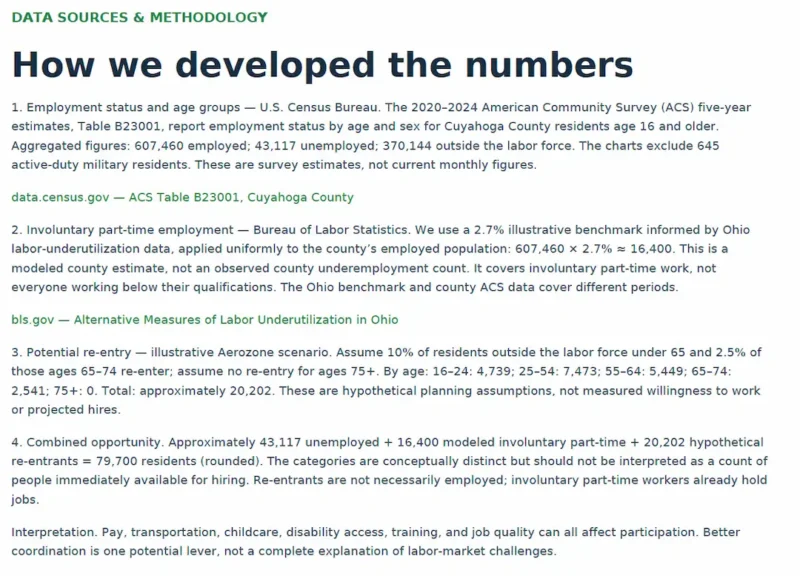
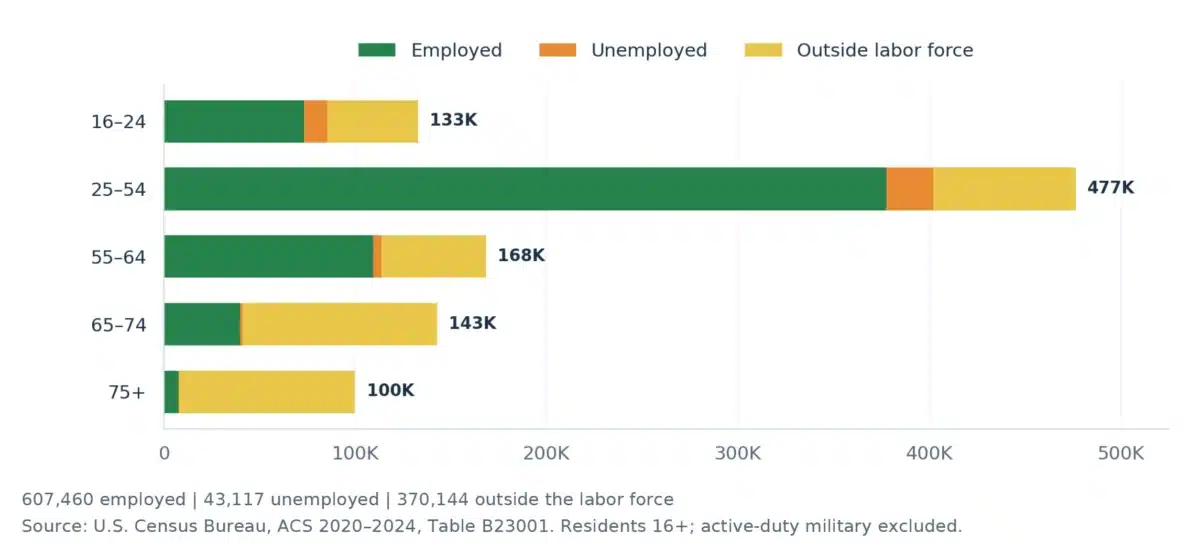
Across Northeast Ohio, employers routinely tell us they struggle to find qualified workers. Yet in Cuyahoga County alone, approximately 43,000 residents are unemployed, while another 370,000 are outside the labor force.
Of course, those 370,000 aren’t all available to work. Many are retired, attending school, raising families, or facing other barriers.
But the numbers invite us to think differently about our workforce challenge.
Chart 1 — Where is our workforce today?
But there’s another dimension to this story.
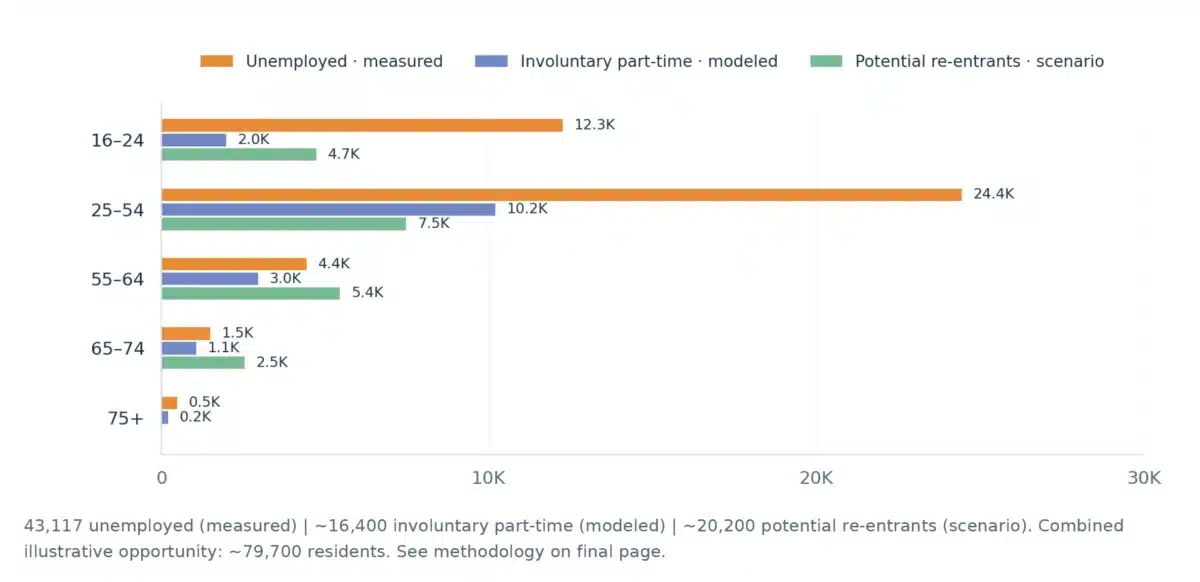
Some residents are actively looking for work. Others are working part-time because they cannot find full-time employment. And some who have left the labor force might return if the right opportunities and support were available.
What if we could bring even a small fraction back?
If 10% of nonparticipants under 65 and 2.5% of those ages 65–74 re-entered the labor force, that would mean approximately 20,000 additional participants.
It’s not a forecast. It’s a possibility worth exploring.
Chart 2 — The talent opportunity hiding in plain sight
The Cupcake Problem
Now, imagine walking into a bakery looking for a very specific cupcake.
You want chocolate, with vanilla frosting and rainbow sprinkles.
The baker smiles and says, “Absolutely! I can make that. But it’ll take four years.”
Imagine hundreds of bakeries, each specializing in different recipes. Some produce basic cupcakes. Others make extraordinarily sophisticated ones. Each operates on its own schedule.
Sound familiar?
Our education and workforce systems work much the same way. Schools, colleges, training providers, and apprenticeship programs develop different capabilities over different timelines.
Meanwhile, employers often arrive looking for a precise combination of skills and experience—and expect it to be available immediately.
Perhaps the problem isn’t the bakers. It’s how we communicate what needs to be baked, when, and for whom.
From Talent Consumers to Talent Partners
Employers have two choices.
They can hire people with foundational capabilities and invest in developing the specialized skills they need.
Or they can engage earlier, helping educators and workforce partners design the talent pipelines they’ll need three, five, or even ten years from now.
Ideally, they do both.
At Aerozone Alliance, we’re working to make those connections more effective.
Our Classes to Careers initiative brings employers into the education process, helping young people discover career pathways while giving businesses a role in developing future talent.
Our Aerozone Talent Partners initiative and Business and Talent Intelligence Platform are designed to strengthen connections among employers, educators, and job seekers through better information, smarter matching, and continuous feedback.
Our hypothesis is simple: We don’t necessarily need more disconnected programs. We need a more connected talent supply chain.
And that requires employers to become active participants, not simply end customers.
So, back to our cupcakes.
If you want the perfect cupcake four years from now, you have two options: help the baker perfect the recipe today, or buy a good cupcake and add the frosting yourself.
Either way, don’t wait until you’re hungry to place your order.
If you’re an employer, educator, or workforce partner ready to help strengthen this supply chain, we’d welcome the opportunity to work together.

Hrishue Mahalaha
Executive Director
Aerozone Alliance